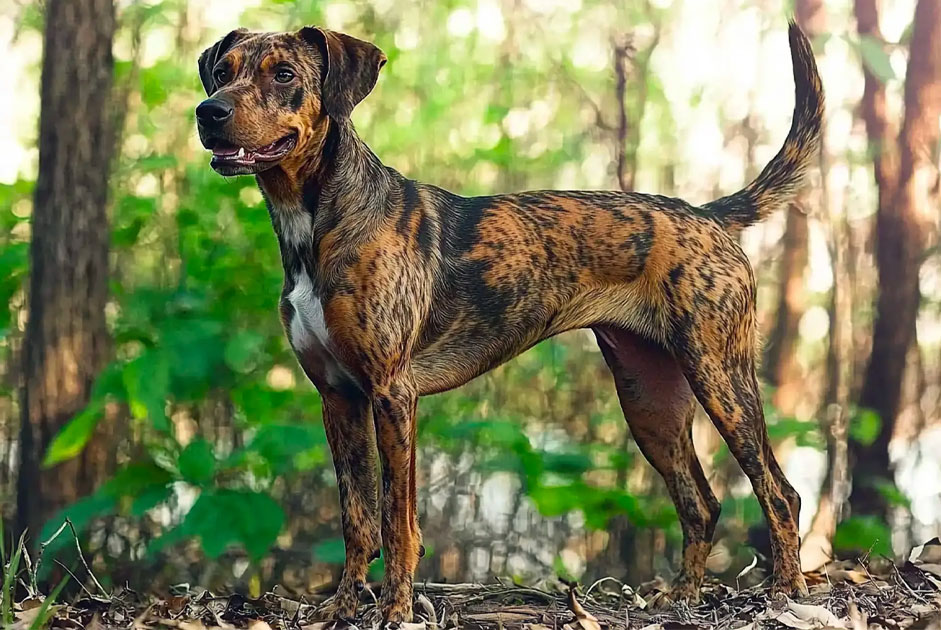
If you never heard tell of the Plott Hound, you’d assuredly be in the majority of the population. A large scent hound with outsize pendent ears, originally bred for hunting bears and wild boar, the breed was designated in 1989 by the NC General Assembly as the official State Dog. Senator Robert Swain of Buncombe County introduced the bill and, months later, State Rep. Hugh Lee of Rockingham brought his Plott Hound, Lucy, to a senate committee meeting which must have sealed the legislative deal to the admiring politicians. The Plott Hound was first registered with the United Kennel Club in 1946 and recognized as a breed by the American Kennel Club in 2006. What was all the fuss about though? The authorities would have it that the Plott Hound is a “rugged, relentless hunting dog who is a mellow gentleman at home but fearless, implacable and bold at work.” Known for its ability to track game over considerable distances, the AKC breed standard refers to the Plott Hound’s stamina, courage and athletic ability when hunting which undeniably has secured the love and accolades of canine enthusiasts.
The Plotts are unique among the six AKC coonhound breeds. They are actually descended from German Hanover hounds – not from English foxhounds. We would be remiss if we didn’t give a nod to a German immigrant named Johannes Plott who, in 1750, arrived in North Carolina from the old country with five of his prized mixed scent hounds. He and the future six generations of Plott family members – were largely responsible for the development of the breed, renowned for its tenacity and bravery. Plott settled in the mountains where he raised a family, hunted bears with his hounds and neighbors, and bred his dogs to local stock. Folks like the branchwater mountaineers appreciated the breed and began to purchase and utilize them as well. Judging from the large attendance at the annual Plott Fest event in Maggie Valley every summer, respect and love for the Plott Hound has a very strong following with people traveling from near and far to celebrate this mountain breed known for its alertness, loyalty and intelligence.
In his November 22nd article “State Dog: Plott Hounds – Carolina Born and Bred,” author Mark Kemp explains how these dogs are inextricably linked to the history of western North Carolina. In an interview with Bob Plott, the then 66-year-old keeper of the breed’s history, he states that the story of his ancestors and their dogs is nothing short of epic. “It’s classic Americana with roots that run deep throughout the state on so many levels. There’s buffalo along (their travels), there’s panthers, there’s Indians and outlaws…. But, they had these dogs that were hunters, they were herders, they were protectors, they were friends…. They defended households during the French and Indian War, during the Revolutionary War, the Civil War. It doesn’t get any more American than that.”
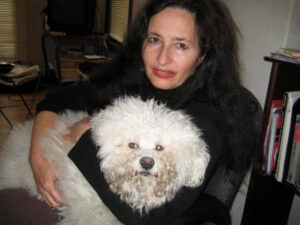
I confess to a big affection for the breed (but don’t tell my Bichon Frise that). Plotts come in a diversity of appearances – you will see an array of brindle-stripe patterns from black-flecked with gold to flaming orange and russet in addition to some solid colors – brown, black, buckskin. All are, however, streamlined, long-tailed, light-footed hunters with a smooth, fine, glossy coat which requires minimal maintenance (just a weekly brushing and an occasional bath). The Plotts are generally healthy dogs with a life expectancy of approximately 12-14 years. The male weighs 50-60 pounds, with females weighing in at 40-55 pounds. Average height for males is 20-25 inches and 20-23 inches for females. For anyone considering getting a Plott Hound, it is critical to know that these dogs require lots of exercise and outside time. Because they are extremely prey-driven, they should always be walked on leash. Prospective owners should plan on an extremely smart and energetic puppy who requires a lot of attention. He or she can be a people-loving dog, but can be a bit standoffish. Thorough socialization with gentle exposure to a wide variety of people and other animals should militate against that happening.
Bob Pl0tt’s affection for the hounds named after his family is eminently clear, but more important are his efforts to document his family’s legacy and how human and the Plott Hounds’ lives were incontrovertibly interwoven. His book, “Strike and Stay: The Story of the Plott Hound” was published in 2007 and more works followed. At the interview with Mr. Kemp, Bob Plott bends down to pet his Plott Hound and wryly remarks, “I’ve always said that when you touch the face of a Plott Hound, you’re touching the face of history.” This is definitely a dog who can rest on its laurels.